Steel Ball for Bearing Failure Prevention | JHSteel Balls
2026-08-05


Steel ball for bearing is the heart of any rolling-element bearing. Without a perfectly round, smooth, and correctly sized ball, the entire assembly loses its load-carrying ability and wears out fast. In heavy-duty machinery, a single failed ball can halt a production line costing thousands per hour. We’ve seen bearings running at 1,800 RPM seize in under 40 minutes because a few balls carried invisible surface cracks from packaging damage. The problem usually isn’t the steel itself—it’s the small decisions made during replacement, storage, or lubrication that cascade into early failure. This guide takes you through the real-world reasons why bearing balls stop working years ahead of schedule and what you can do about it.
Bearings don’t all run chrome steel G10 balls. The material and grade directly control how a bearing handles load, speed, temperature, and corrosion. Here are the types you’ll encounter when you’re sourcing replacements.
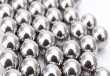
Chrome steel balls, made from AISI 52100 or equivalent, are the most common. They reach 60–66 HRC after through-hardening, giving excellent wear resistance in clean, oil-lubricated environments. For high-speed spindles or pumps exposed to moisture, ball bearing chrome steel balls may need to be swapped for 440C stainless steel balls. These hold a hardness of about 58 HRC and won’t rust when condensation appears. Another type is ceramic balls—silicon nitride (Si3N4)—used in hybrid bearings. They are 40% lighter than steel, electrically insulating, and can run without lubrication for short periods. However, they cost 5–10 times more and require precisely matched steel races. Alloy steel balls, like tungsten carbide or M50 tool steel, show up in aerospace or high-temperature applications above 300°C. The ball grade also matters. ABMA Grade 10 balls have a diameter tolerance of ±0.00127 mm and surface roughness Ra ≤ 0.025 μm, while Grade 100 balls can vary ten times that. For replacing balls in a precision bearing, matching the original grade isn’t optional—it’s survival.
When a bearing engineer looks at a ball, they don’t just see a sphere. The metal’s microstructure, surface finish, hardness depth, and sphericity form a combined signature that predicts lifespan. Most precision chrome steel balls feature a martensitic grain structure with finely dispersed carbides, achieved through quenching and tempering cycles that control retained austenite below 3%. Surface hardness normally sits between 60 and 66 HRC, but what’s often forgotten is that the hardness must be gradual—a case depth of at least 0.5 mm on a 12.7 mm ball prevents cracking under impact. Roundness, measured in microns, is what keeps vibration levels low. A batch of Grade 28 balls might show up to 0.0028 mm out-of-round, which at 3,000 RPM becomes a shockwave hitting the race every rotation. Surface finish (Ra) should be 0.020–0.032 μm for high-speed applications—any rougher and the lubricant film breaks, leading to metal-to-metal contact. Then there’s noise level, rated by the SBN (Specific Bearing Noise) index on instruments like the Anderon meter. A ball set with SBN values above 32 dB will create an audible whine in electric motor bearings. Features don’t stop at the ball itself; consistency across a batch of 100 balls can make the difference between five years of quiet running and a warranty claim in six months.
From agricultural disc harrows to high-speed dental drills, the working conditions push bearing balls to their limits in very different ways. Industrial steel ball uses range from deep-groove radial bearings in electric motors to angular contact bearings in machine tool spindles. In a 15 kW electric motor on a conveyor, the 6205 bearing carries radial loads of about 2.5 kN across nine 7.938 mm balls. The grease shear and modest heat generation are manageable as long as the balls maintain their roundness. Compare that to a front wheel bearing on a compact SUV. Here, the same size bearing might face combined radial and axial loads peaking at 8 kN when cornering, plus impact from potholes. The steel balls for these automotive bearings need extra case depth and tight diameter grouping to avoid one ball absorbing more load than the others. Then there are slewing bearings in wind turbines or excavators, where balls can measure 50 mm in diameter or more, handling overturning moments of 2,000 kNm. Slewing bearing steel balls are often made from high-cleanliness 100Cr6 or similar to withstand the low-speed, high-load, oscillating motion without developing fatigue spalls. The application determines not just the material and grade, but also the acceptable defect rate. A ball for a bicycle hub can handle a minor surface pit that would spell instant catastrophe in a jet engine bearing.
Pricing a batch of bearing balls isn’t as simple as checking a weight chart for chrome steel. The grade, material, packaging, and order volume shift quotes by 30% or more. Grade 10 balls cost roughly 2–3 times Grade 100 balls because achieving sub-micron tolerances demands extra lapping passes and 100% optical inspection. Material choice adds another layer. A standard 9.525 mm chrome steel ball (grade 25) might cost $0.03–$0.05 each in bulk, while a silicon nitride ceramic ball of the same size can exceed $2.00. Manufacturing volume plays a big role. Our factory at JHSteel Balls produces 150–200 million steel balls annually in the 9.525–26.987 mm diameter range, which keeps per-unit costs competitive for standard grades. But custom lots—say a specific surface roughness requirement or a tight diameter grouping for matched sets—cost more because they interrupt high-volume runs. Steel ball specifications and tolerances directly influence price: a batch with a 0.6 μm Ra surface finish and SBN below 28 dB will be premium-priced. Packaging format also matters. Single-layer, grease-covered plastic trays prevent ball-on-ball contact bruises during transit and add about 10–15% to the cost compared to bulk-packed poly bags. For buyers, the lowest per-thousand price often conceals the real cost of early failure if the balls arrive with micro-indentations from poor packaging.
Let’s get practical. Most early bearing ball failures trace back to five root causes that maintenance teams can control. The first is contamination. A particle of 0.05 mm—thinner than a human hair—can wedge between a ball and race, creating a dent that turns into a spall after a few million stress cycles. When handling replacement balls, clean the workbench, use filtered gloves, and never pour balls from a dirty container. The second cause is mounting damage. If a bearing is press-fitted onto a shaft by applying force through the rolling elements, the balls get pushed into the race, leaving flat spots called brinell marks. That bearing will rumble from day one. Always press on the ring being mounted. Third is lubrication failure. About 36% of bearing failures start with grease breakdown, starvation, or wrong lubricant selection. A low-viscosity oil that runs out at 80°C leaves balls running dry; a lithium complex grease not meant for high-moisture environments will emulsify and lose its film strength. Fourth is corrosion from moisture or aggressive chemicals. Even chrome steel balls will etch within days if condensation sits on them after a washdown. Stainless or ceramic balls may be worth the extra cost here. Fifth is handling damage before installation. We’ve opened sealed bags of grade 10 balls that showed crescent-shaped fractures from being dropped just once. Bearing steel ball selection should factor in not only the bearing’s load and speed but also the reality of your workshop environment.
Inspection before installation catches the problems that cause later failures. Using a 10x loupe and a clean light source, check each ball for surface defects like pits, scratches, or rust spots. A single pit 0.15 mm deep will act as a stress riser and cut bearing life by 70% in a radial load application. Look for flat areas or wear bands—signs the balls have been sliding instead of rolling, usually from overload or inadequate preload. Bearing ball surface defects such as chatter marks (a wavy pattern) indicate grinding or lapping errors from poorly maintained equipment, and these balls will generate heat and noise from the start. If you have access to a noise tester, a good set of balls for a 6203 bearing should run under 30 dB. Above 35 dB, reject the batch. Also check for size consistency. A simple bench micrometer can verify that diameter variation across a set is within 1 μm for precision classes. Finally, store balls in a dry, vibration-free cabinet. Humidity above 60% will eventually spot chrome steel, and any metal-to-metal vibration during storage can create fretting corrosion that’s invisible until the bearing fails after 50 hours of operation.
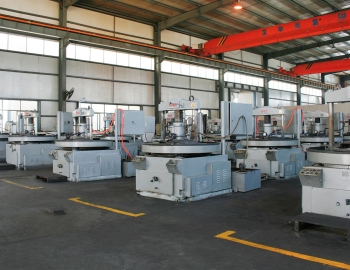
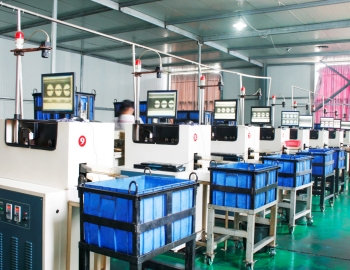
When your operation depends on reliability, the supply chain behind the ball matters as much as the ball itself. High precision bearing balls from JHSteel Balls come from a production line built for consistency. Our factory produces between 150 and 200 million steel balls per year, focused on the 9.525 mm to 26.987 mm diameter range most used in industrial bearings, CV joints, and slewing rings. Every batch passes through automated optical inspection for surface defects and laser micrometers for diameter and roundness. We maintain a climate-controlled final assembly area to protect ball surfaces before packaging. The traceability system ties each box back to a specific heat number and production date, so if a quality question ever arises, we can pull the full records within minutes. Beyond standard chrome steel balls (100Cr6/AISI 52100), we supply automotive CV joint steel balls, stainless steel balls, and can arrange for ceramic or alloy options according to customer needs. If you are looking for a steel ball for bearing supplier who understands that early failure prevention starts at the factory floor, please contact us for the latest product specifications and a quote tailored to your volume and tolerance requirements.
Start by identifying the exact bearing number from the shield or seal, then check the manufacturer’s specification sheet for ball material, grade, and size. If you’re replacing balls only, measure a sample ball with a micrometer accurate to 0.001 mm. Match the material first—mixing chrome and stainless balls in the same bearing creates galvanic corrosion. Grade matters too: if the original bearing had G20 balls, don’t drop to G100. When in doubt, send a sample ball to your supplier for analysis or ask for the OEM specification for that bearing model.
The main causes are contamination (dirt or dust entering the bearing), incorrect mounting that dents the balls, poor lubrication leading to metal-to-metal contact, corrosion from water or chemicals, and fatigue from overload. A single 0.1 mm indent on a ball can nucleate a fatigue spall within 10% of the bearing’s design life. In gearboxes, broken tooth debris often circulates and embeds into balls, turning them into miniature grinding tools against the races.
Remove the balls carefully, clean them with a solvent, and examine under a bright light with 10x magnification. Rotate each ball slowly, looking for pits, scratches, discoloration, flat spots, or a dull surface texture. Check for size consistency with a micrometer. If you have a noise tester, run a set and reject any batch exceeding the bearing’s published SBN limit. Even without specialized tools, dropping a cleaned ball onto a flat piece of hardened steel plate produces a sharp ring; a dull thud suggests a crack or internal flaw.
Never. Even if the old balls look fine to the naked eye, they have already accumulated fatigue cycles and micro-wear. Mixing them with new balls creates diameter differences that cause unequal load sharing, which accelerates failure. A single undersized ball in a set reduces the load-carrying capacity by up to 60% because the surrounding balls carry unevenly. Always replace the full set. If one ball has failed, the others have been running in the same stressed environment and will likely fail soon after.
Properly stored chrome steel balls protected with a light preservative oil and kept in a temperature- and humidity-controlled environment can remain within specification for 5 years or more. The real risks come from vibration during storage (fretting corrosion), humidity (rust), and packaging that allows balls to bump together, creating micro-dents. For critical applications, we recommend using balls within 2 years of manufacture and storing them in their original single-layer packaging until installation.
Contact JHSTEELBALLS to get high quality and precision steel balls for your applications, bearings lines and any other applicable places. We will reply within 24 hours