Custom Machined Steel Balls That Cut Rework Costs
2026-08-18


An industrial valve steel sphere is the critical component inside a ball valve that controls the flow of liquids or gases. A precisely manufactured sphere ensures a tight seal and reliable operation, while a poorly made one can lead to leaks, system failure, and costly downtime. The difference between a successful project and a failed one often comes down to the quality of this single component. Understanding what defines a high-performance sphere is the first step in mitigating sourcing risks before you issue a purchase order.
At its core, an industrial valve steel sphere is a spherical closure element with a bore, or port, drilled through its center. When the valve is open, the bore aligns with the pipeline, allowing flow. A quarter-turn of the valve handle rotates the sphere, and the solid part of the ball blocks the flow path, creating a seal against the valve seats. These components are essential in demanding industries such as oil and gas, chemical processing, water treatment, and power generation, where performance under pressure and temperature extremes is non-negotiable. The material and geometric precision of the sphere dictate the valve's overall performance, lifespan, and safety.
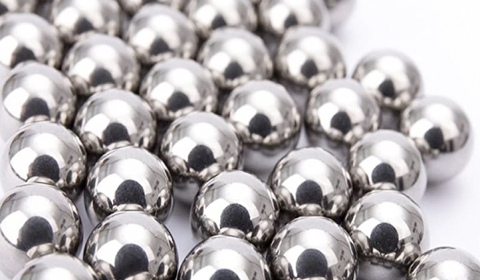
The selection of a valve sphere depends entirely on the application's specific requirements for corrosion resistance, pressure, temperature, and fluid compatibility. Choosing the wrong type is a common sourcing error that leads to premature failure.
Placing an order based on price and material grade alone is a significant risk. A detailed qualification process is necessary to ensure the industrial valve steel sphere you receive will perform as expected. Before approving a sample or production run, your quality assurance team should verify these five critical attributes. Failing to check any one of them can compromise the integrity of the final valve assembly.
| Inspection Point | Why It Matters (Risk of Failure) | What to Specify or Verify |
|---|---|---|
| Sphericity & Roundness | An imperfect sphere will not create a uniform seal against the valve seats. This deviation, even if microscopic, creates leak paths, especially under high pressure. It is a primary cause of valve leakage. | Specify the required G-grade (e.g., G100, G200) according to ISO 3290 or ASME B16.34. Use a coordinate measuring machine (CMM) to verify the roundness tolerance on samples. |
| Surface Finish (Ra) | A rough surface finish can tear or prematurely wear down the valve seats (often made of softer materials like PTFE). It also creates tiny channels for fluid to seep through, causing a slow but persistent leak. | Specify a maximum surface roughness value (e.g., Ra < 0.2 µm). Verify with a profilometer. A mirror-like finish is often required for high-integrity sealing. |
| Port Geometry & Finish | Sharp edges on the bore can create turbulence in the flow, increasing pressure drop. A poorly finished bore can also damage "pigging" equipment used for pipeline cleaning. | Ensure bore edges are properly chamfered or radiused. The internal surface of the bore should also meet specific finish requirements if the application is sensitive to flow characteristics. |
| Material Traceability | Without a Material Test Report (MTR) or a certificate of conformity, you cannot be certain the material is what you ordered. An incorrect alloy can lead to rapid corrosion and catastrophic failure in the field. | Always request an MTR (e.g., EN 10204 3.1) that traces the material back to the original heat lot. Use a portable X-ray fluorescence (XRF) analyzer to verify the alloy composition of samples. |
| Seat-Matching Compatibility | The hardness of the steel sphere must be compatible with the valve seat material. A ball that is too hard can deform a soft seat, while a ball that is too soft can be scored or damaged by contaminants in the media. | Cross-reference the sphere material's hardness (HRC) with the pressure-temperature rating and material properties of your chosen valve seats (e.g., PTFE, PEEK, Metal). Review our steel ball specifications and tolerances for guidance. |
The demand for high-quality valve spheres comes from industries where flow control is fundamental to safety and efficiency. Each application has unique challenges that dictate the sphere's specifications. In oil and gas production, spheres must withstand corrosive sour gas and high pressures. For chemical manufacturing, a stainless steel valve ball made from a specific alloy is needed to resist aggressive chemicals. In water treatment facilities, spheres must resist corrosion and abrasion from suspended solids. Even in less critical applications like commercial plumbing, a reliable precision valve sphere prevents leaks that can cause significant property damage over time. The versatility of the ball valve design, centered around a simple yet effective sphere, has made it a staple across all industrial sectors.
As a professional steel balls manufacturer, JHSteel Balls Co.Ltd. understands the technical requirements for producing high-integrity components. With an annual production capacity of 150-200 million steel balls in sizes ranging from 9.525 mm to 26.987 mm, our facility is equipped to handle orders for various industrial needs. We utilize advanced inspection equipment and a complete intelligent quality checking system to ensure every sphere meets stringent standards for sphericity, surface finish, and material purity.
Our team at our steel ball production factory can process and produce steel balls according to specific customer drawings and requirements, ensuring the final product integrates perfectly into your valve design. Whether you need standard high precision bearing balls or custom-engineered spheres for a unique application, our quality system provides the assurance and traceability that procurement teams require.
Start by defining your operational requirements: fluid type, pressure, temperature, and any special conditions like abrasion. Use this information to select the appropriate material and design (floating vs. trunnion). Then, use the sourcing checklist above to create a detailed specification sheet for your Request for Quote (RFQ) to send to potential manufacturers.
At a minimum, you should require dimensional inspection (sphericity, diameter, port size), surface finish measurement (Ra), and material verification (MTR and/or XRF analysis). For critical applications, additional non-destructive testing (NDT) like dye penetrant testing or ultrasonic testing may be necessary to check for surface or subsurface defects.
Look for a manufacturer with a documented quality management system and advanced inspection capabilities. Ask for evidence of their ability to provide full material traceability. A supplier who can produce custom parts according to your drawings and has a clear understanding of industry standards is a valuable partner. Evaluate their production capacity to ensure they can meet your volume and delivery timelines.
If you are looking for a reliable supplier for your industrial valve steel sphere needs, please contact our technical team to discuss your specifications and request a quote.
Contact JHSTEELBALLS to get high quality and precision steel balls for your applications, bearings lines and any other applicable places. We will reply within 24 hours