5-Year Cost of a Steel Ball for Bearing | JHSteel Balls
Calculating the True 5-Year Cost of a Steel Ball for Bearing Applications
Selecting the cheapest steel ball for bearing assemblies is a common sourcing error that can lead to significant downstream costs from machinery failure, production downtime, and warranty claims. A low per-unit price often masks poor material quality, inconsistent geometry, or inadequate surface finishing. To make a financially sound decision, procurement managers and engineers must look beyond the initial invoice and evaluate the total cost of ownership over the component's expected lifecycle.
What is a Steel Ball for Bearing?
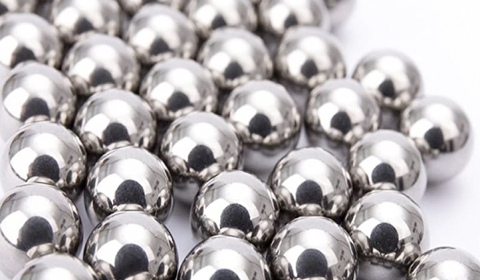
A steel ball for a bearing is a precision-engineered, highly spherical rolling element that is fundamental to the function of most ball bearings. These components are designed to separate the inner and outer bearing rings (races), reduce rotational friction, and support radial and axial loads. The most common material used is high-carbon chromium steel, often designated as GCr15 or SAE 52100, valued for its excellent hardness, wear resistance, and load-bearing capacity. The performance of the entire bearing assembly depends directly on the quality of these balls, including their dimensional accuracy, surface smoothness, and material integrity.
Common Types of Bearing Steel Balls
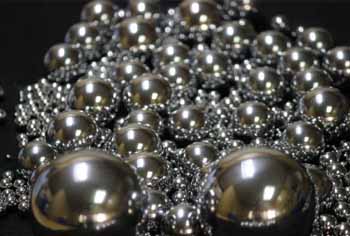
While chrome steel is standard, different applications demand specific material properties. Choosing the right type is the first step in managing long-term costs and performance.
- Chrome Steel Balls: The industry standard for most ball bearing applications. Made from high-carbon chromium alloy steel, they offer high hardness and superior wear and deformation resistance. They are the most cost-effective choice for controlled, non-corrosive operating environments.
- Stainless Steel Balls: Used where corrosion resistance is a primary concern. Materials like AISI 440C or 316 provide protection against moisture, chemicals, and oxidation. While the initial bearing ball price is higher, they prevent costly failures in food processing, medical, and marine applications.
- Ceramic Balls (Si3N4, ZrO2): These offer unique properties like lighter weight, higher operating speeds, lower friction, and electrical insulation. Their cost is significantly higher, making them suitable for specialized, high-performance equipment in aerospace or electric motor applications.
- Alloy Steel Balls: Special alloys can be formulated for extreme temperature, high-impact, or other demanding conditions not met by standard chrome or stainless steel. These are typically custom-ordered for specific industrial needs.
Key Features that Determine Performance and Cost
The final price and reliability of a bearing ball are determined by a few critical technical specifications. Understanding these helps you specify the right component without overpaying or risking failure.
- Material Composition: The choice between chrome steel, stainless steel, or ceramic is the largest driver of cost. The raw material price and the complexity of manufacturing directly influence the final chrome steel ball cost versus that of other materials.
- Precision Grade: Balls are graded according to standards like ISO 3290 or ABMA. These precision ball grades (e.g., G10, G25, G100) define the maximum allowable deviation from a perfect sphere (sphericity) and diameter tolerance. A lower grade number indicates higher precision and a higher cost. For example, a G10 ball has much tighter tolerances than a G100 ball. You can review our detailed steel ball specifications and tolerances to match a grade to your needs.
- Hardness (HRC): Measured on the Rockwell C scale, hardness indicates a ball's resistance to indentation and deformation under load. For chrome steel balls, a hardness of 60-67 HRC is typical and ensures a long service life in high-load applications.
- Surface Finish: A smooth, mirror-like surface (low roughness value) is essential for minimizing friction, noise, and vibration in a bearing. Superior finishing requires additional manufacturing steps, which adds to the cost but greatly improves performance.
Calculating the 5-Year Total Cost of Ownership (TCO)
Focusing solely on the purchase price is a short-term view. A strategic buyer analyzes the Total Cost of Ownership (TCO) over a five-year period to identify the most economical choice. This model accounts for predictable expenses and potential risks associated with lower-quality components.
Here is a framework for calculating the TCO of your bearing steel balls:
| Cost Category |
Description |
Example Calculation / Consideration |
| Confirmed Costs |
Expenses known at the time of purchase. |
Unit Price per Ball + Total Shipping Costs + Import Tariffs + Tooling Fees (if any). This is the number on the initial quote. |
| Estimated Costs |
Calculable risks based on component quality. |
- Premature Replacement: (Cost of new ball + Labor for repair + Downtime cost per hour) × Estimated early failure rate. A ball that costs 15% less but fails 30% sooner is far more expensive.
- Inspection Losses: Cost of your quality team's time to inspect and reject a batch of non-conforming balls from an unreliable supplier.
- Corrosion Damage: Cost to replace an entire assembly because an unsuitable chrome steel ball was used in a damp environment instead of stainless steel.
|
| Unknown/Hidden Costs |
Negative impacts that are difficult to quantify but have serious financial consequences. |
- Reputational Damage: The cost of losing a customer due to a field failure in your product caused by a faulty bearing.
- Increased Warranty Claims: The direct cost of servicing or replacing products under warranty due to component failure.
- Production Line Stoppage: The massive opportunity cost when your own manufacturing line goes down because of a failed bearing in a critical machine.
|
When you apply this model, it becomes clear that a slightly higher initial investment in a quality steel ball from a manufacturer with a robust quality system often results in a significantly lower five-year TCO.
Common Sourcing Mistakes to Avoid
Navigating the global market for bearing balls can be complex. Avoiding these common pitfalls will help protect your production lines and your budget.
- Mistake 1: Focusing Only on Unit Price. As demonstrated by the TCO model, the cheapest ball is rarely the most cost-effective. Always factor in the costs of failure, downtime, and replacement.
- Mistake 2: Mismatching Material to the Environment. Using standard chrome steel balls in applications exposed to moisture or chemicals is a frequent error. The savings are quickly erased by corrosion-induced failures. Always specify stainless steel or another appropriate material for such conditions.
- Mistake 3: Under-Specifying the Precision Grade. Choosing a lower-grade ball (e.g., G100) for a high-speed, high-precision application to save money will likely lead to excessive vibration, noise, and premature bearing failure. Match the grade to the operational demands.
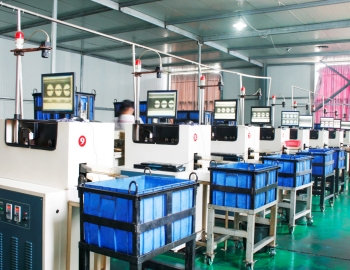
- Mistake 4: Ignoring Supplier Quality Systems. A low price may indicate a lack of investment in quality control. A reliable bearing ball supplier will have verifiable quality checks in place, like our complete intelligent quality checking system, which ensures consistency and reduces your incoming inspection burden. Our steel ball production factory implements these systems at every stage.
JHSteel Balls: Your Reliable Bearing Ball Supplier
At JHSteel Balls Co.Ltd., we understand that our components are critical to the performance of your products. As a professional steel balls manufacturer, we are dedicated to producing high-quality steel balls that deliver reliability and long-term value. Our facility has an annual production capacity of 150-200 million steel balls in sizes ranging from 9.525 mm to 26.987 mm. Every steel ball we manufacture is strictly inspected with advanced equipment and verified by our complete intelligent quality checking system. This commitment to quality ensures that you receive components that meet your specifications and reduce your total cost of ownership.
Frequently Asked Questions about Bearing Steel Balls
How much do precision bearing balls cost?
The cost varies significantly based on four main factors: material (chrome steel, stainless, ceramic), precision grade (G10 is more expensive than G100), size, and order quantity. A small, low-grade chrome steel ball may cost fractions of a cent, while a large, high-grade ceramic ball can cost many dollars. Always request a quote based on your specific requirements.
What affects steel ball pricing for bearings?
The primary factors influencing pricing are raw material costs, the manufacturing precision required (grade), heat treatment and finishing processes, and the supplier's quality control overhead. Larger order volumes typically result in a lower price per unit.
Are stainless steel bearing balls worth the cost?
In the right application, absolutely. For equipment operating in humid, wet, or corrosive environments, the higher upfront cost of stainless steel is an investment that prevents far greater expenses related to rust, system contamination, and premature failure. For dry, indoor applications, chrome steel remains the more economical choice.
If you are looking for a reliable steel ball for bearing supplier, please contact us for a detailed quote based on your application needs.