Understanding Ball Precision Beyond the Grade Number
2026-08-20


Selecting the wrong custom precision steel balls for a bearing assembly is a costly mistake. A ball that is improperly matched to its operating conditions—load, speed, or environment—can lead to premature bearing failure, unexpected equipment downtime, and even warranty claims. The root of the problem often lies in treating these components as simple commodities. True precision balls are engineered components where material, grade, and surface finish must be meticulously specified to ensure performance and reliability. Before you issue your next Request for Quote (RFQ), understanding these critical selection factors is the first step to avoiding component failure.
This guide explains the key technical decisions behind sourcing loose ball bearings. We will cover how to map your application's demands to the correct ball specifications, identify the common pitfalls that procurement teams face, and ensure your RFQ contains the exact details needed to secure reliable, high-performance components.
The single most important decision in sourcing precision bearing balls is matching the component to its operational environment. A ball that excels in a high-load, low-speed industrial gearbox will fail quickly in a high-speed electric motor. Using a simple selection matrix helps align the primary operational stresses—load, speed, and environment—with the optimal ball material and grade. This ensures you are not over-engineering with costly materials or under-engineering and risking failure.
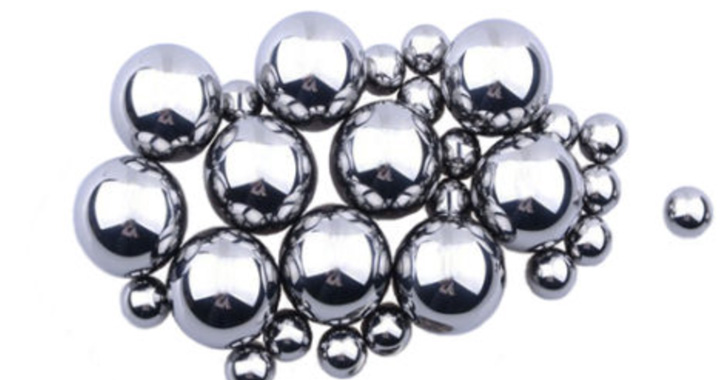
Use the following table as a starting point for specifying balls based on your primary application challenge.
| Operating Condition | Recommended Material | Typical Grade | Key Rationale & Considerations |
|---|---|---|---|
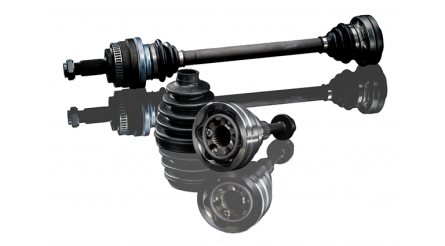
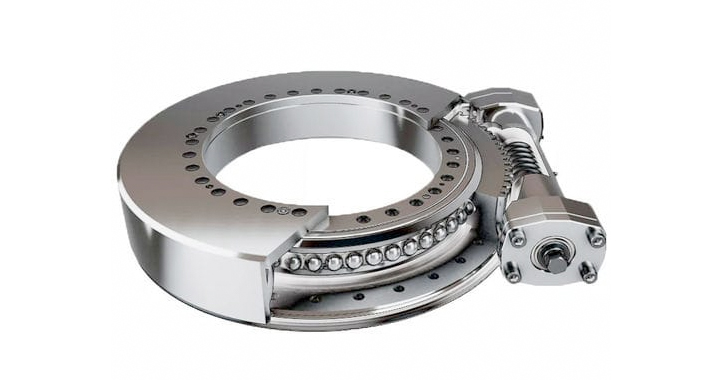
| High Load, Moderate Speed (e.g., Industrial Gearboxes, Automotive CV Joints, Slewing Bearings) |
AISI 52100 Chrome Steel | G10 - G40 | Chrome steel offers excellent hardness (HRC 60-67) and high load-carrying capacity. It is the industry standard for most bearing applications due to its balance of performance and cost. It requires a clean, lubricated environment as it has low corrosion resistance. See our range of ball bearing chrome steel balls for more details. |
| High Speed, Low-to-Moderate Load (e.g., Electric Motors, Spindles, Turbochargers) |
Silicon Nitride (Si3N4) Ceramic or G5/G10 Chrome Steel | G3 - G10 | Ceramic balls are 60% lighter than steel, reducing centrifugal force at high speeds, which minimizes friction and heat. They are also harder and have a higher elastic modulus. For a more economical option, a very high grade (G5/G10) steel ball with an excellent surface finish is suitable. |
| Corrosive Environment (e.g., Food Processing, Medical Devices, Marine Applications) |
AISI 316/304 Stainless Steel or AISI 440C Stainless Steel | G100 - G500 | AISI 316 offers the best corrosion resistance, especially against chlorides and acids, but is unhardened and only suitable for low loads. AISI 440C is a hardened martensitic stainless steel that provides good corrosion resistance with high hardness for load-bearing applications. |
| High Temperature (e.g., Ovens, Exhaust Systems, Aerospace) |
Silicon Nitride (Si3N4) Ceramic or AISI 440C Stainless Steel | G10 - G100 | Ceramic balls can operate at temperatures exceeding 1000°C with minimal thermal expansion. 440C stainless steel retains its hardness at temperatures up to 300°C. Standard chrome steel begins to lose hardness above 120°C. |
| Non-Magnetic or Electrically Insulating (e.g., Sensitive Electronics, Medical Imaging) |
Silicon Nitride (Si3N4) Ceramic or AISI 316 Stainless Steel | G10 - G500 | Ceramic balls are excellent electrical insulators, preventing arcing damage in electric motors. Austenitic stainless steels like 316 are largely non-magnetic, making them suitable for applications where magnetic interference is a concern. |
Specifying only the diameter and material is a common path to poor performance. Experienced engineers and procurement managers know that the subtle details of a ball’s geometry and finish are just as important as the material itself. Avoiding these frequent oversights can significantly improve the quality and consistency of your sourced components.
To create an effective RFQ, you must be able to translate your application needs into standard technical language. Ball grades are defined by standards bodies like the American Bearing Manufacturers Association (ABMA). A grade is not a single value but a set of tolerances governing multiple geometric properties. The lower the grade number, the tighter the tolerances and the higher the precision.
Here are the key parameters to specify in your RFQ:
By including these details, you provide suppliers with a clear, unambiguous set of requirements. This reduces the risk of receiving parts that meet a general description but fail to perform under your specific operating conditions. You can find detailed charts on our steel ball specifications and tolerances page.

At JHSteel Balls Co.Ltd., we are a professional steel ball manufacturer specializing in high-quality precision balls. Our facility has an annual production capacity of 150-200 million steel balls in sizes ranging from 9.525 mm to 26.987 mm. We understand that quality is not just about meeting a grade; it's about delivering consistency, cleanliness, and reliability in every batch. Our complete intelligent quality checking system and advanced inspection equipment are used to strictly verify every order against customer specifications, ensuring the components you receive perform exactly as designed. We can also process and produce custom balls according to your unique requirements.
What precision ball grade is best for high-speed bearings?
For high-speed applications, lower grade numbers like G5 and G10 are recommended. These grades have tighter tolerances for sphericity and size variation, which minimizes vibration. Equally important is a low surface roughness (Ra) to reduce friction and heat. In extreme speed applications, lighter ceramic balls (Si3N4) are often the best choice.
How do I choose precision balls for corrosion resistance?
Material is the primary factor. For general water or mild chemical resistance, AISI 440C stainless steel provides a good balance of hardness and corrosion resistance. For superior resistance to acids, salts, and harsh chemicals, AISI 316 stainless steel is the preferred choice, though it is not hardenable and is suited for low-load applications. Ceramics are also inherently corrosion-proof.
Which precision ball material handles heavy loads?
Through-hardened AISI 52100 chrome steel is the industry standard for high-load applications due to its exceptional compressive strength and hardness. For applications combining heavy loads with corrosion or temperature challenges, hardened martensitic stainless steels like 440C are a suitable alternative.
If you are sourcing precision balls and need help defining the optimal specifications for your application, please contact our technical team. We can provide guidance and a quote based on your specific needs.
Contact JHSTEELBALLS to get high quality and precision steel balls for your applications, bearings lines and any other applicable places. We will reply within 24 hours