
Polished Steel Balls Mirror Finish Grades Explained
2026-08-02


Custom stainless steel ball is a precision sphere machined from a specific stainless steel alloy, produced to exact dimensional and metallurgical requirements that standard off-the-shelf balls cannot meet. Diameters typically range from 0.5 mm to over 50 mm, with our core production covering 9.525–26.987 mm at volumes of 150–200 million pieces per year. The “custom” part involves tailoring grade, tolerance grade (G10 through G1000), hardness, surface roughness, and – critically – corrosion resistance. Buyers in marine, chemical processing, and medical device industries don’t just need a ball that rolls smoothly. They need one that survives salt fog, acidic cleaners, or sterilisation fluids without pitting or discolouration. That’s where a well‑specified custom stainless steel ball changes the game: the right alloy and the right testing regimen turn a commodity sphere into a reliable, long‑life engineering component.
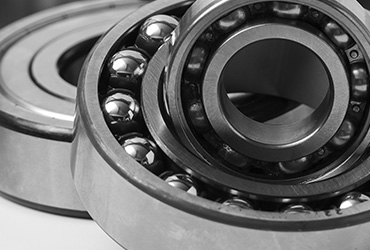
When a specification calls for corrosion-resistant steel balls, the conversation almost always starts with three austenitic grades: 304, 316, and 316L. 304 offers decent resistance in fresh water and mild chemical environments, cost‑effective but vulnerable to chloride attack. 316, with its 2‑3% molybdenum, pushes pitting resistance higher and is the workhorse for food machinery and marine deck hardware. 316L adds ultra‑low carbon, eliminating sensitisation during welding or heat treatment – a detail that matters when the ball is assembled into a welded cage or housing. Martensitic 440C is a different animal: heat‑treatable to 58–62 HRC, it provides excellent wear life and is often found in ball bearing chrome steel balls, but its corrosion protection is moderate at best; a 440C ball will show rust in a 48‑hour salt spray unless protected by oil or passivation. For highly aggressive media, duplex stainless steels (e.g., 2205) or even nickel alloys enter the picture. Each alloy choice defines the performance envelope, and that’s exactly why custom stainless steel balls are ordered grade‑specific – no guesswork, just a metal that matches the job.
Alloy selection is only half the story. Stainless steel ball fabrication processes directly influence how a ball behaves in a corrosive environment. Cold heading or hot forging can introduce subsurface micro‑cracks; improper grinding can leave residual tensile stress. JHSteel Balls applies a multi‑step finishing sequence: rough grinding, fine grinding, lapping, and an optional ultra‑finish pass. Every batch then goes through a controlled passivation treatment – a nitric or citric acid bath that strips free iron from the surface and grows a dense, protective chromium oxide layer. We’ve measured open‑circuit potentials shift by over 200 mV after correct passivation, a clear electrochemical fingerprint that the passive film is intact. Salt spray testing per ASTM B117 becomes predictable. A properly passivated 316L custom stainless steel ball can exceed 1,200 hours without red rust, while a skipped or poorly controlled passivation step may cut that life to under 100 hours. Buyers who demand zero‑defect parts often request a wet‑film thickness check and a copper sulfate spot test on the final lot. These are cheap insurance. Our steel ball production factory includes in‑line optical surface scanners and eddy‑current systems that catch microscopic cracks and hard spots before they become field failures.
Walk through any saline‑exposed plant or sterile cleanroom and you’ll find custom stainless steel balls in surprisingly diverse roles. Deep‑sea ROV thrusters rely on 316L balls inside thrust‑bearing assemblies, where even a pinprick of rust can seize a motor at 3,000 metres depth. Pharmaceutical check valves use electropolished 316L balls that must withstand repeated steam‑in‑place cycles and aggressive CIP detergents without releasing iron ions. Dosing pumps for agricultural chemicals often run 304 or 316 balls, but the spec sheet demands a 200‑hour salt spray pass because diesel‑based carriers are unpredictably corrosive. Food processing lines – slicing, dicing, mixing – incorporate balls in rotary unions and quick‑disconnect couplings; here, the material must meet FDA‑compatible standards and clean easily, which pushes engineers toward 316 or 316L. Even in automotive sensor assemblies, a tiny 2.5 mm custom stainless steel ball acts as a check element exposed to urea solution; a corrosion failure would trigger an emissions fault. All these industrial steel ball uses share one demand: documented, verifiable corrosion performance that goes far beyond a generic mill certificate.
Cost for a single, made‑to‑print custom stainless steel ball isn’t something you can pull from a catalogue. Material grade swings the price dramatically: 304 is roughly 20‑30% cheaper than 316, and duplex or nickel alloys can multiply the raw material cost by four or more. Diameter tolerance adds another layer; a G10 ball with sphericity below 0.25 µm requires longer lapping cycles and higher scrap rates than a G100 commercial‑grade ball. Order volume matters – setting up a batch of 5,000 balls versus 500,000 spreads the tooling and metrology costs differently. Corrosion testing itself is a line item. A standard salt spray test might add $150–$300 per lot; cyclic corrosion testing with humidity and drying phases can run over $1,000. OEM stainless steel balls for critical aerospace or medical jobs often require full chemical analysis, passivation certification, and even intergranular corrosion tests per ASTM A262. Every added sheet of paper has a price, but it removes risk. We usually advise buyers to balance cost and confidence: specify the essential tests, skip the ones that don’t reflect the actual operating environment. That’s how you get a competitive price without compromising safety.
Engineers don’t need to become corrosion scientists, but a few sharp lines on a drawing can prevent a lot of grief. Start by naming the test standard and its duration. For salt spray, write “ASTM B117, 480 hours neutral salt fog, max one pit per ball larger than 0.3 mm, no base‑metal rust.” If the part sees wet/dry cycles, push for ASTM G85 Annex A5 cyclic acidified salt fog. Immersion testing in a representative fluid often tells you more than a fog cabinet; state the solution concentration, temperature, and acceptance mass loss. Ask the supplier to include passivation process certification – AMS 2700 Method 2 or ASTM A967 Nitric 2 are solid references. Demand a certificate of analysis showing the actual alloy chemistry, not a generic statement. For critical lots, request a sample ball from the same production run to be cut, mounted, and inspected for intergranular attack. All these details belong inside the purchase order, not in an email thread. Our quality team works directly from the buyer’s steel ball specifications and tolerances, so the clearer the criteria, the fewer the surprises.
We produce more than 150 million custom precision steel balls every year, serving bearing OEMs, Tier‑1 automotive systems, and specialised industrial equipment builders across 40+ countries. Our facility runs dedicated stainless steel production lines, segregated cross‑contamination, with intelligent optical sorters that can inspect every single ball for surface defects at line speed. Corrosion testing isn’t something we send out – it’s fully in‑house. Walk‑in salt spray chambers, potentiostatic pitting testers, and a wet chemistry lab sit next to the grinding floor. For OEM stainless steel balls with full PPAP documentation, we manage the entire FMEA and control plan internally. Whether you need 10,000 pieces of 316L ball for a medical pump or a ship‑set of 440C hardenable balls for a steering bearing, we ship with complete material and test reports. If you’re searching for a partner who treats a custom stainless steel ball not as a catalogue number but as an engineered component, reach out for a quotation and technical discussion today.
The most common method is salt spray (fog) testing according to ASTM B117, where balls are exposed to a continuous 5% NaCl mist at 35°C. The test runs for a specified duration, typically 48 to 1,000+ hours, and is evaluated by checking for red rust or measuring the size of any pits. Immersion testing in acidified water, per ASTM G48, is also frequently used for pitting‑resistant grades like 316L. For medical or aerospace lots, electrochemical potentiostatic tests provide quantitative pitting potentials. A reliable supplier will provide a full test report with photos and dimensional measurements before and after exposure.
There’s no single “best” grade – it depends on the environment. 316L stainless steel balls are the default choice for marine, chemical, and pharmaceutical applications thanks to molybdenum‑enhanced pitting resistance and low carbon weldability. If hardness and wear life are equally important, 440C offers high strength and can survive mild chemical exposure with proper passivation. For extreme halide environments, super‑duplex or nickel alloys outperform any standard stainless. Discuss the exact fluid and temperature with your supplier to narrow the choice.
Put the required test standard, duration, and acceptance criteria directly on the engineering drawing or purchase order. For example: “ASTM B117, 720 hours, no visible red rust on any ball surface.” Add passivation requirements (AMS 2700 or ASTM A967). Request a certificate of analysis showing the chemical composition of the heat used. If the part will be welded or heat‑treated in the assembly, also specify an intergranular corrosion test like ASTM A262 Practice E. Clarity in the specification eliminates guesswork and ensures the delivered custom stainless steel balls behave exactly as expected in the field.
Contact JHSTEELBALLS to get high quality and precision steel balls for your applications, bearings lines and any other applicable places. We will reply within 24 hours
