
Bearing Steel Ball Manufacturer Application Matching Guide
2026-08-01


A precision steel ball factory is a production facility that manufactures spherical metal balls to controlled requirements for diameter, roundness, surface roughness, hardness, and material composition. Unlike general metal ball suppliers, a precision producer typically follows a defined process that includes forming, flashing, heat treatment, grinding, lapping, cleaning, sorting, and inspection. Finished balls are used in bearings, automotive CV joints, valves, pumps, linear motion systems, measuring equipment, and other assemblies where even a small dimensional variation can affect performance. For importers and OEM purchasing teams, factory evaluation involves far more than unit price. Minimum order quantity, monthly output, equipment condition, inspection records, material traceability, packaging, and delivery planning all shape the final sourcing outcome.
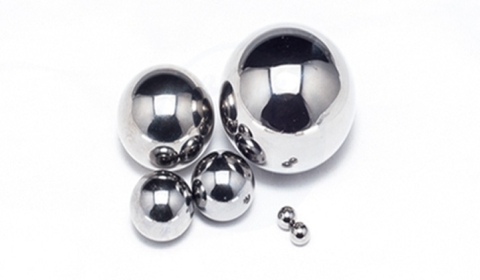
A precision steel ball manufacturer may supply several product groups based on material, application, and accuracy grade. Chrome steel balls, often made from bearing steel such as GCr15 or AISI 52100, are widely used in bearings and industrial mechanisms. Stainless steel balls are suited to applications requiring improved corrosion resistance, including food equipment, chemical machinery, and medical devices. Carbon steel balls are commonly chosen for lower-cost assemblies, positioning components, and general industrial applications. JHSteel Balls Co.Ltd. also supplies alloy balls, ceramic balls, bearing balls, CV joint balls, and other metal balls according to customer drawings or technical specifications. Diameter ranges can be selected for each project, including commonly requested sizes from 9.525 mm to 26.987 mm, while other sizes and grades can be discussed with the production team.
Material selection should follow the operating environment, not simply a catalog preference. Chrome steel is a practical choice when hardness, wear resistance, and bearing performance are priorities. Stainless steel is generally better where moisture, cleaning chemicals, or mild corrosion are expected. Ceramic balls, including silicon nitride options, offer low density and strong electrical insulation properties, which can make them suitable for selected high-speed bearing designs. CV joint steel balls require closely controlled geometry and surface quality because they transfer motion under load inside automotive driveline assemblies. Buyers can review precision steel ball products before submitting requirements for diameter, material, grade, quantity, and packaging.
The important characteristics of a precision ball extend beyond its nominal diameter. Buyers should review diameter tolerance, spherical deviation, surface roughness, hardness, roundness, crushing load, and metallurgical condition. In bearing applications, minor variation between balls can influence vibration, noise, service life, and load distribution. A dependable supplier should be able to explain how these values are controlled throughout production. JHSteel Balls Co.Ltd. uses advanced steel ball inspection equipment and a complete intelligent quality checking system to inspect manufactured balls. Depending on the product and specification, this may include automatic sorting, sampling checks, visual inspection, dimensional measurement, hardness testing, and batch-linked documentation.
Before placing an order, request a drawing review and confirm the applicable standard. The purchasing file should identify ball diameter, tolerance grade, material designation, hardness range, surface finish, packing method, quantity, and required inspection documents. It is also sensible to ask whether the supplier can provide a material certificate, dimensional report, hardness result, and certificate of conformity. Buyers comparing suppliers can review the available steel ball specifications and tolerances, then compare those values with their own engineering requirements. A low quotation offers little value if the shipment contains mixed lots, poor surface finish, or incomplete traceability for use in an expensive assembly.
Precision balls are used across a broad range of industrial products. Bearing manufacturers use them in deep groove bearings, angular contact bearings, slewing bearings, linear bearings, and specialized bearing assemblies. Automotive companies use hardened balls in CV joints, steering systems, and transmission-related components. Pump and valve manufacturers may specify stainless steel balls for fluid control, while laboratory equipment and measuring devices can require tightly controlled roundness and surface finish. Industrial grinding balls are a separate product group used in mills for mineral processing, cement, chemicals, and other materials. Purchasing teams should distinguish between bearing-grade balls and grinding media because their heat treatment, size range, surface requirements, and operating conditions differ significantly.
Application details allow the factory to recommend a more practical specification. Tell the supplier whether the ball will rotate continuously, carry impact loads, contact a hardened raceway, operate in oil or grease, or face water and cleaning agents. For automotive programs, provide the CV joint type, groove dimensions, load requirements, and estimated annual demand. Buyers sourcing automotive parts can review automotive CV joint steel balls to understand the product category before discussing a drawing-based order. The same principle applies to bearing balls, valve balls, and custom precision components.
Precision steel ball pricing varies with material, diameter, tolerance grade, order quantity, processing route, inspection level, and packaging. A standard chrome steel ball in a repeat production size may have a lower unit cost than a small custom lot that requires special lapping, sorting, or separate heat treatment. Stainless steel and ceramic materials may also have higher raw material costs than common bearing steel. Freight, export packing, testing, currency movement, and delivery terms all influence the final landed price. Buyers should request a quotation based on a complete specification instead of asking only for a price per kilogram. The same diameter can have very different values when one order requires ordinary industrial accuracy and another requires a high precision grade.
Quantity affects both production efficiency and purchasing value. Larger orders allow the factory to spread setup, tooling, inspection, and packing costs across more pieces. Small trial orders may have a higher unit price, particularly when the production line must be adjusted for a special diameter or material. Annual demand is also useful information because a supplier may suggest scheduled releases, blanket orders, or multiple shipments instead of a single large delivery. Ask for price breaks at realistic quantities, such as 10,000 pieces, 50,000 pieces, and 100,000 pieces, while confirming that every price is based on the same tolerance and inspection standard. This avoids a quotation appearing cheaper simply because quality requirements have been reduced.
The precision ball factory MOQ is the smallest order quantity a plant will accept for a particular material, size, tolerance, and processing route. There is no universal MOQ for every ball. A standard size already in production may be available in a lower quantity, while a custom diameter or special grade may require a larger batch to cover setup and inspection costs. MOQ can also vary according to packing requirements, whether the buyer requests loose bulk packing, small retail cartons, labeled bags, or export pallets. When requesting a quotation, provide the target order quantity, expected annual consumption, trial requirement, and forecast for the following six to twelve months. This gives the supplier a sounder basis for discussing a practical production plan.
Importers can often lessen the impact of MOQ by arranging scheduled releases, using an existing material grade, accepting standard export packing, or combining several related sizes into one production plan where the factory permits it. A sample order may be treated differently from a repeat order, so ask whether sample quantities are available and whether the sample cost can be credited against a future production batch. Buyers should not assume that a very low MOQ is always an advantage. If a supplier accepts quantities below its efficient production level, it may add setup charges, extend lead times, or offer less favorable sorting economics. A clear discussion during quotation prevents unexpected issues after the purchase order is issued.
Steel ball production capacity refers to the quantity a factory can manufacture within a defined period while maintaining its stated quality requirements. JHSteel Balls Co.Ltd. has annual production of approximately 150 million to 200 million steel balls in different standards and sizes from 9.525 mm to 26.987 mm, with processing available according to customer needs. Capacity should not be assessed by one annual figure alone. Buyers should ask how much output is available for their specific diameter, material, tolerance, and required delivery month. A factory may have high total output but limited open capacity for a special stainless steel grade or tightly controlled bearing specification. Production scheduling, heat treatment availability, inspection resources, and packing space all influence the quantity that can be shipped on time.
For standard items, production may take around 15 to 30 working days after order confirmation, depending on stock, raw material availability, quantity, and the factory schedule. Custom products can require 30 to 60 working days or longer when a new process review, special tooling, approval samples, or additional inspection is required. Export transport is separate from manufacturing time. Allow time for pre-production clarification, sample approval, packing, port handling, and ocean or air freight. A buyer that needs delivery by 15 October should work backward from that date and leave sufficient time for drawing confirmation and shipping. A written production schedule is more valuable than a general promise that goods will be delivered “soon.”
To assess capacity, buyers should request practical evidence rather than relying only on a website statement. Ask for the annual output range, monthly output for the requested size, number of production lines, heat treatment arrangement, inspection equipment, typical batch size, current lead time, and planned maintenance periods. It is useful to compare the factory’s stated capacity with sample production records, inspection reports, packing photos, and previous export experience for similar products. One important question is whether the supplier can support a trial order and then increase monthly deliveries without changing the tolerance or material. Buyers may also ask how the factory handles urgent replacement lots, rejected pieces, mixed-size orders, and demand peaks before an annual shutdown.
Capacity has a quality dimension as well as a volume dimension. If output increases without sufficient inspection staff or sorting equipment, the risk of nonconforming balls can rise. A suitable supplier should maintain a controlled process from incoming steel inspection through final packing. Review the factory’s manufacturing process through the steel ball manufacturing steps, then ask which records will accompany the shipment. Clear acceptance criteria established before production help reduce disputes over borderline measurements and make repeat orders easier to schedule.
Industrial steel ball supply works best when the buyer provides complete technical and commercial information from the beginning. State the application, ball material, diameter, tolerance, hardness, surface finish, quantity per order, annual forecast, packing method, destination port, and required documents. When the balls arrive, inspect the outer packaging for moisture or damage before opening. Keep different batches separate and retain the labels or heat numbers. During assembly, use clean tools and avoid dropping precision balls onto hard surfaces, as dents may not be visible during a quick visual check. Do not mix balls with different grades or measured diameters in one bearing or mechanism unless the design specifically permits it.
Storage conditions matter as well. Keep steel balls in a dry, clean area away from corrosive chemicals, standing water, and direct contact with untreated wood or dirty metal surfaces. For long-term storage, follow the buyer’s approved rust-prevention procedure and check the protective oil at set intervals. Before installation, clean the balls with a suitable solvent, inspect them for stains or scratches, and confirm that the selected batch matches the assembly record. If the application involves high speed, high load, or safety-related automotive parts, use the lubrication and assembly method specified by the equipment designer. These straightforward steps protect the value of the factory’s dimensional and surface controls.
A reliable precision steel ball manufacturer should be able to discuss engineering details, not merely provide a price list. JHSteel Balls Co.Ltd. manufactures precision balls, steel balls, metal balls, alloy balls, ceramic balls, bearing balls, and CV joint balls. Its annual output reaches about 150 million to 200 million pieces across different standards, and customer-specific processing can be arranged. The company applies advanced inspection equipment and an intelligent quality checking system to verify ball quality. For buyers with special drawings, material requirements, or packaging instructions, the factory can review the project before quotation. This approach is particularly useful for OEM purchasing teams that need dependable repeat supply rather than a one-time spot purchase.
When comparing JHSteel Balls with other suppliers, submit the same specification to every candidate and compare the complete offer. Check the MOQ, sample policy, lead time, production capacity for the requested size, inspection documents, packing, payment terms, and delivery term. Ask whether the quoted price includes sorting and whether an additional charge applies to a custom tolerance. You can also review the company’s custom precision steel balls for projects requiring drawing-based production. If you are looking for a dependable industrial steel ball supply partner, contact JHSteel Balls Co.Ltd. for current product pricing and a quotation matched to your required quantity and application.
The MOQ depends on ball diameter, material, tolerance, inspection requirements, packing, and whether the size is already in regular production. A standard chrome steel ball may be available in a lower trial quantity, while a custom stainless steel or ceramic ball may require a larger batch. Ask the factory for both its sample quantity and regular production MOQ. Also request details of any setup or sorting charge for quantities below the normal batch size. Providing an annual forecast can help the supplier suggest scheduled releases or a blanket order. The appropriate MOQ is the smallest quantity that can be produced and inspected economically without weakening the agreed specification.
Standard production commonly takes around 15 to 30 working days after all technical details are confirmed, raw materials are available, and the order enters the factory schedule. Custom products may take 30 to 60 working days or more if they require process approval, special material, new tooling, sample inspection, or additional sorting. This period does not include international transport, customs, or port handling. Buyers should request a schedule covering drawing confirmation, material preparation, production, inspection, packing, and dispatch. A repeat order can move faster when the same specification, tooling, and inspection method are already approved, although actual timing still depends on current capacity.
Ask for annual output, monthly output for the requested size, number of production lines, heat treatment resources, inspection equipment, available working shifts, and current lead time. Then compare those figures with the quantity and delivery frequency required by your business. Request evidence such as sample inspection reports, production photos, packing records, and references for similar sizes or applications. It is also important to ask how the factory manages capacity during peak seasons and what happens if a batch fails inspection. A capable supplier should explain how it maintains material traceability, separates batches, controls quality, and increases output without changing the approved tolerance or surface condition.
JHSteel Balls Co.Ltd. supports importers, distributors, OEM purchasing teams, and engineering companies with precision steel balls and related products. The factory can discuss MOQ, lead time, material selection, inspection requirements, and planned production quantities for each project. Whether you need bearing balls, chrome steel balls, CV joint balls, ceramic balls, alloy balls, or custom metal balls, send your drawing or specification for review. If you are searching for a precision steel ball factory and need the latest product quotation, contact JHSteel Balls Co.Ltd. today.
Contact JHSTEELBALLS to get high quality and precision steel balls for your applications, bearings lines and any other applicable places. We will reply within 24 hours
