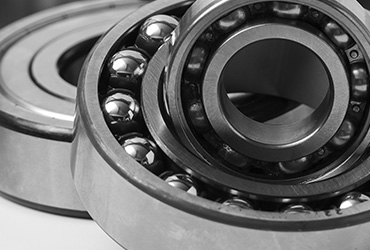
Precision Balls vs Standard Balls Key Differences
2026-08-04


316 stainless steel ball refers to a precision metal sphere made from an austenitic stainless steel grade containing chromium, nickel, and molybdenum. The grade typically contains about 16 to 18 percent chromium, 10 to 14 percent nickel, and 2 to 3 percent molybdenum, although exact chemistry varies by standard and product specification. Chromium creates a thin passive oxide film that protects the surface. Molybdenum improves resistance to pitting in chloride-bearing environments, while nickel helps preserve the austenitic crystal structure. As a result, 316 stainless steel balls are generally nonmagnetic or only weakly magnetic after annealing. They are widely used in valves, pumps, marine equipment, chemical systems, medical devices, food machinery, and precision mechanisms where corrosion resistance and cleanliness are important.
316 stainless steel balls are available in several forms based on production condition, tolerance, surface finish, and intended application. Standard commercial balls are commonly supplied for general industrial movement, mixing, valve seats, and fluid-handling equipment. Precision grades are manufactured with tighter controls for diameter variation, roundness, surface roughness, and hardness, making them suitable for bearings and instrument components. Annealed balls usually have the lowest magnetic response because their austenitic structure remains more stable. Cold-worked balls can show slight magnetism after forming, grinding, or substantial mechanical deformation. Some buyers specify 316L, the low-carbon version, when welding or heat-affected zones are part of the project. Available surface conditions include ground, lapped, polished, and mirror-polished finishes. Selecting the right ball involves more than choosing a diameter; buyers should also define the grade, tolerance, hardness, surface condition, inspection method, and packaging requirements.
Standard 316 stainless steel balls are suitable for applications where reliable movement, corrosion resistance, and clean handling matter more than extremely tight geometric tolerances. Precision grades are preferred when small changes in size or roundness could affect friction, flow control, sealing performance, or instrument accuracy. Buyers should request the required grade under AISI, ASTM, ISO, or another accepted specification. Diameter ranges can be matched to the mechanism, from small balls for laboratory and medical assemblies to larger balls used in valves and industrial equipment. JHSteel Balls Co.Ltd. can review drawings, samples, tolerance tables, and annual demand before recommending a production route. This helps buyers avoid paying for a grade that exceeds their needs while preventing a general-purpose ball from being used in a precision assembly.

The main features of this material come from the relationship between its chemistry and crystal structure. In its normal annealed condition, 316 stainless steel has a face-centered cubic austenitic structure. Austenite is not strongly ferromagnetic, so a finished ball usually has little or no attraction to an ordinary permanent magnet. This is different from many martensitic and ferritic stainless steels, which can produce a much stronger magnetic response. A properly ground and polished ball also offers good toughness, stable performance across a broad range of industrial temperatures, and a smooth surface finish. It is not a bearing steel intended to match the extreme load capacity of hardened chrome steel. Its value comes from the balance of corrosion resistance, low magnetic response, cleanliness, and dependable service in wet or chemically active environments.
Molybdenum is the key element that distinguishes 316 stainless steel from common 304 stainless steel in many chloride-exposed applications. Salt water, coastal air, cleaning fluids, and process chemicals can cause small pits on less suitable grades. Molybdenum strengthens the passive film and helps the surface resist localized attack, particularly in the presence of chloride ions. It does not make the ball immune to corrosion, however. Concentrated hydrochloric acid, stagnant brine, high-temperature seawater, and poor cleaning practices can still damage the material. The surface should remain clean, and the component design should avoid crevices that trap fluid. For buyers comparing corrosion resistant steel balls, 316 is often a practical upgrade from 304, but the final selection should account for concentration, temperature, exposure time, stress, and other chemicals in the system.
In most cases, annealed 316 stainless steel balls are considered nonmagnetic stainless steel balls. A magnet may show no noticeable attraction, or only a faint response that is difficult to detect by hand. Still, “nonmagnetic” does not mean that every ball produced from this grade will behave exactly the same way. Cold working can transform a small amount of austenite into strain-induced martensite, which has a stronger magnetic response. Deep forming, aggressive rolling, heavy grinding, and other mechanical processes can contribute to this change. A ball made from the correct chemical grade may therefore show mild magnetism after processing without being counterfeit or incorrectly supplied. When magnetic behavior is part of the specification, buyers should state the test method, magnet strength, test location, and acceptable attraction level before ordering.
A simple shop-floor magnet test can offer a quick indication, but it cannot replace material verification. Test a clean, dry ball using the same magnet and distance specified for production inspection. Compare the result with an annealed reference sample, then record whether the ball attracts, slides toward the magnet, or remains unaffected. For a more controlled purchasing decision, request a material certificate showing chemical composition and production condition. A laboratory can also measure magnetic permeability or use more advanced methods when the application requires a low magnetic signature. Inspection should cover several pieces from each lot rather than one selected sample. Surface contamination, residual iron particles, or contact with a steel tray can all produce misleading results.
Marine grade steel balls are used in seawater valves, desalination equipment, boat hardware, offshore instruments, pumps, fluid-control assemblies, and coastal processing machinery. The appeal is straightforward: 316 stainless steel handles chloride exposure better than many standard stainless grades and does not normally create a strong magnetic field near sensitive equipment. Balls may serve as check-valve elements, positioning parts, rolling contacts, or flow-control components. For marine service, the specification should address more than the alloy itself. Surface finish, passivation, cleanliness, and contact with dissimilar metals all matter. Crevice corrosion can develop where a ball sits tightly against a seat and seawater cannot circulate freely. Designers should evaluate pressure, impact, wear, temperature, and the risk of galvanic corrosion between the ball and surrounding components.
Beyond marine equipment, this material is used in chemical processing lines, laboratory systems, pharmaceutical machinery, food handling equipment, medical instruments, pumps, spray systems, and clean fluid controls. Its low magnetic response can be useful near sensors, magnetic separation equipment, and certain diagnostic or laboratory devices, although the complete assembly should be checked for magnetic components. A smooth finish supports cleaning and can reduce areas where residue collects. In medical and food-related projects, the ball may require a specified surface roughness, cleaning process, passivation treatment, or traceability package. JHSteel Balls Co.Ltd. supplies several kinds of metal balls and precision balls for industrial requirements. Buyers can review the company’s [industrial steel ball applications](https://www.jhsteelballs.com/applications.html) before discussing a drawing or sample.
316 stainless steel balls are often selected for marine applications because seawater contains chloride ions that can attack ordinary carbon steel and cause localized corrosion on less suitable stainless grades. The molybdenum-bearing chemistry gives the passive surface better resistance to pitting and crevice attack than 304 under many comparable conditions. The alloy also avoids the heavy red rust associated with unprotected carbon steel and can maintain a clean appearance when properly maintained. Even so, the engineering decision should consider water temperature, oxygen levels, flow speed, stagnant zones, pressure, cleaning chemicals, and contact with other metals. A 316 ball may perform well in a seawater valve but fail early if it is trapped in a hot, stagnant chloride pocket. Material selection and component design must work together.
The price of a 316 stainless steel ball depends on raw material costs, diameter, order quantity, tolerance, surface finish, heat treatment, inspection, packaging, and delivery destination. Small precision balls may require more grinding and lapping time than larger commercial balls, so price should not be judged by weight alone. A polished ball with narrow tolerances and individual inspection will usually cost more than a standard industrial ball. 316L may also be priced differently from 316 because of melting practices and market demand. Export orders can include charges for certificates, third-party inspection, custom labeling, corrosion protection, and shipping. To receive a useful quotation, provide the grade, diameter, quantity, tolerance, hardness, finish, application, packing requirement, and target delivery date. A clear drawing often reduces follow-up questions and improves quotation accuracy.
Before installation, inspect the balls for dents, scratches, rust staining, embedded particles, or packaging damage. Clean them with a compatible solvent or neutral detergent, then dry them completely. Do not use carbon-steel tools or contaminated trays where a clean stainless surface is required. Confirm that the mating seat, raceway, bore, and seal match the specified ball diameter and tolerance. In a bearing or valve, excessive clearance can cause noise, leakage, or unstable movement, while insufficient clearance may lead to binding. Follow the equipment manufacturer’s lubrication instructions, as some greases and process fluids are not suitable for stainless components. For dimensional requirements, consult JHSteel Balls’ [steel ball specifications and tolerances](https://www.jhsteelballs.com/techspecs.html). Store unused balls in sealed, dry packaging away from salt spray and iron dust.
Handle precision balls with clean gloves or soft, lint-free cloths. Fingerprints contain salts that can leave marks during long-term storage, especially in humid conditions. When magnetic response is important, inspect the balls before they enter the assembly and keep them away from grinding debris that may cling to the surface. Use calibrated gauges for diameter checks and suitable instruments for roundness and roughness measurements. When a batch is used in a fluid valve, inspect both the ball and the seat because damage to either component can quickly affect the other. Keep lot numbers and certificates with the production record. For large export orders, buyers may request dimensional reports, chemical analysis, hardness data, surface inspection records, and packing photographs before shipment.
JHSteel Balls Co.Ltd. is a 316 stainless steel ball supplier serving industrial buyers, wholesalers, equipment manufacturers, and engineering companies. The company manufactures precision balls, steel balls, metal balls, alloy balls, ceramic balls, CV joint balls, and bearing balls. Annual production of different standards of 9.525 to 26.987 mm steel balls reaches approximately 150 to 200 million pieces, while custom sizes and processing can be discussed according to customer requirements. Each batch is inspected with advanced steel ball inspection equipment and supported by an intelligent quality checking system. Buyers who need traceability can discuss drawings, samples, material standards, tolerances, packaging, and inspection documents with the sales team. The [steel ball production factory](https://www.jhsteelballs.com/manufacturing.html) page provides more information about manufacturing and quality control.
A reliable supplier should be able to distinguish between a material request and an actual performance requirement. For example, “316 stainless” may not be enough if the ball must remain nearly nonmagnetic after processing, withstand seawater at 60°C, fit a precision valve seat, or meet a defined surface roughness. JHSteel Balls Co.Ltd. can assess these details before production and recommend a suitable grade, process route, inspection plan, and packing method. The company also produces other ball materials when 316 stainless steel is not the best fit. Customers comparing stainless, chrome steel, ceramic, alloy, or custom precision products can review the [custom precision steel balls](https://www.jhsteelballs.com/precesion-steel-balls.html) range and then request a current quotation.
Most annealed 316 stainless steel balls are nonmagnetic or show only very weak attraction to a permanent magnet because their austenitic face-centered cubic structure is not strongly ferromagnetic. A ball may show mild magnetism after cold working, heavy forming, aggressive grinding, or other deformation that produces strain-induced martensite. This response does not automatically mean the material is the wrong grade. Chemical analysis, a material certificate, and a controlled permeability test provide stronger evidence than a hand magnet alone. If your equipment requires a very low magnetic signature, state the acceptable limit and inspection method in the purchase specification. The supplier can then select the production condition and testing method more carefully.
Marine equipment exposes components to seawater, salt spray, humidity, and chloride contamination. Molybdenum in 316 stainless steel improves resistance to pitting and crevice corrosion compared with many common stainless grades, including 304, under similar conditions. The balls also offer good toughness, a clean surface, and normally low magnetic response. They can be used in valves, pumps, marine instruments, desalination systems, and offshore equipment when the component design is appropriate. The grade is not completely corrosion-proof. Hot stagnant seawater, tight crevices, damaged surfaces, and contact with dissimilar metals can still create problems. Ask the supplier about passivation, surface finish, inspection, and the exact service temperature before placing a marine order.
Chromium in the alloy reacts with oxygen to form a thin passive film that limits further metal oxidation. Nickel supports the stable austenitic structure and helps the material maintain useful corrosion performance in many service conditions. Molybdenum improves the passive film’s resistance to localized chloride attack, which is why 316 is widely selected for seawater and chemical environments. The film can repair itself when the surface is clean and oxygen is available, but abrasion, contamination, acids, high heat, or stagnant deposits can damage it. Good design, proper cleaning, passivation when specified, and suitable storage all influence service life. Material grade is only one part of effective corrosion control.
316 stainless steel can be suitable for medical, laboratory, pharmaceutical, food, and chemical equipment when its exact composition, surface finish, cleanliness, and processing history meet project requirements. Its corrosion resistance and low magnetic response are useful around clean fluids, instruments, and processing systems. However, the right choice depends on chemical concentration, temperature, sterilization method, pressure, wear conditions, and regulatory documentation required by the buyer. Some projects need 316L, electropolishing, passivation, or special certificates rather than standard 316 alone. Mating materials also matter. Before ordering, provide the operating medium, temperature range, ball diameter, tolerance, surface finish, and inspection requirements so the supplier can confirm suitability.
A 316 stainless steel ball is usually a low-magnetic, corrosion-resistant option for equipment exposed to moisture, chlorides, chemicals, or strict cleanliness requirements. Its austenitic structure explains its weak magnetic response, while molybdenum helps protect against localized corrosion. Cold working can change the magnetic result, so the production condition and test method should be included in the order whenever magnetism matters. If you are looking for a 316 stainless steel ball supplier, contact JHSteel Balls Co.Ltd. for current product pricing, available sizes, custom processing, inspection documents, and export packing. Share your drawing or application details to receive a practical recommendation and the latest quotation.
Contact JHSTEELBALLS to get high quality and precision steel balls for your applications, bearings lines and any other applicable places. We will reply within 24 hours
